
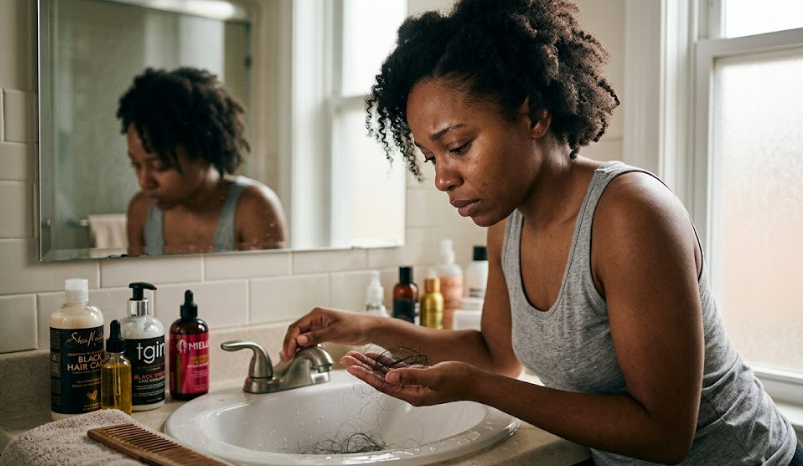
Let’s talk about something that can sometimes get very little airtime, even within our own community, but can feel heavy on the heart: hair loss. We know our hair is more than just strands; it’s our crown, our identity, and a profound form of self-expression. So, noticing that it’s thinning, or seeing more hair in the comb than usual, can spark serious worry.
Before we dive into the common culprits, let’s get the most important part out of the way. This article is for informational purposes only. When it comes to hair loss, you must seek professional guidance. Getting an accurate diagnosis of the underlying cause of your hair loss is critical before starting any treatment. Consult with physicians, board-certified dermatologists, licensed trichologists, or licensed hair care professionals. They are the only ones qualified to run appropriate tests, provide a diagnosis, and advise you on oral medications, supplements, or dietary changes.
Now, let’s explore some of the main reasons Black women experience hair loss.
The Leading Cause: Traction Alopecia
If we’re going to talk about hair loss in our community, we have to put Traction Alopecia right at the top of the list. It is, unfortunately, the leading cause of hair loss for Black women.
The “Why” Behind It:
Traction Alopecia is hair loss caused by chronic pulling. This is a progressive condition that occurs over time when consistent tension is placed on the hair follicle, eventually damaging it so severely that it may stop producing hair altogether.
We are queens of protective styling. We love our box braids, neat cornrows, heavy weaves, and long-lasting wigs. But the reality is, many of these styles, if done too tightly, place immense stress on our most delicate strands—our edges (hairline) and the crown.
The combination of tight styles, often left in too long, plus repeated installations, creates the perfect storm for Traction Alopecia. If a style is causing you pain, tension, or headache, or if you can see your skin being stretched or pulsing beneath a braid… it’s too tight and dangerous.
Other Significant Causes
While Traction Alopecia is prevalent, it’s not the only culprit. Our bodies and environments are complex systems that directly impact hair health.
1. Central Centrifugal Cicatricial Alopecia (CCCA):
CCCA is a form of scarring alopecia that disproportionately affects Black women. Unlike Traction Alopecia, which is largely mechanical, CCCA is more systemic and mysterious. It generally begins in the crown of the head and expands circularly (centrifugal) outward. What makes CCCA so critical to address is that it causes scarring (cicatricial), which means it replaces hair follicles with scar tissue. Hair lost to CCCA usually cannot grow back in areas where the follicles have been permanently destroyed. Early diagnosis is vital for halting the progression.
2. Nutritional Deficiencies:
Our hair is a barometer for our internal health. It is one of the last systems in the body to receive nutrients, so if you are deficient, your hair is often the first to suffer. Deficiencies that commonly impact Black women’s hair include:
- Iron (and Ferritin): Critical for carrying oxygen to hair follicles. Low iron (or anemia) is extremely common in premenopausal women due to menstrual cycles.
- Vitamin D: Helps regulate hair growth. Deficiencies are extremely high in the Black community, partly because melanin blocks Vitamin D absorption from sunlight.
- Zinc, Biotin, and B-Vitamins: essential for cellular function and hair protein (keratin) production.
How to Help (After Your Diagnosis)
Once you’ve had that necessary consultation with a physician, dermatologist, or trichologist and have a clear diagnosis, you can explore targeted ways to help manage, stop, and, in some cases, reverse the hair loss.
1. Adjusting Styles and Maintenance:
- Ease the Tension: This is the #1 rule for Traction Alopecia. Your hair should never hurt. Opt for looser, low-manipulation styles that allow the perimeter of your hair to breathe.
- Take Breaks: Don’t go from one tight protective style directly into the next. Your hair needs recovery time.
- Consult Licensed Pros for Styles: A licensed hair care professional who prioritizes hair health can install braids or weaves without excessive tension and advise you on styles appropriate for your current hair condition.
2. Nutritional Intervention:
- Supplementation: Your doctor might recommend iron supplements, Vitamin D, or specific hair vitamins based on your blood work results. Do not self-supplement for hair loss.
- Dietary Changes: Work on incorporating nutrient-rich foods that specifically target your deficiencies—for example, more iron-rich foods like dark leafy greens or Vitamin D sources.
3. Medical Treatments:
- For CCCA: Treatments focus on calming inflammation to prevent further scarring. This might include topical steroids, steroid injections, or oral medications, all of which require a prescription from a dermatologist.
- For Female Pattern Baldness (Androgenetic Alopecia): A professional can discuss medical interventions like Minoxidil (topical or oral) or other treatments specifically designed to combat pattern thinning.
The Bottom Line
Hair loss is a journey, and noticing it is the first courageous step. Remember: you are not alone in this, and you do not have to guess. Seek professional help. Rooting for your scalp health and your crown!