We’ve all been there. You spend hours (and a decent chunk of change) in the stylist’s chair, enduring the pulling, the tucking, the “just a little tighter, honey.” You walk out looking like a million bucks, ready to give your hair a break and embrace the low-maintenance life of a protective style.
But let’s keep it real, ladies: sometimes, that “protective style” is actually a wolf in sheep’s clothing. Instead of shielding your precious strands from the elements, it’s actively working to sabotage your hair goals. We’ve all seen the horror stories—the receding hairlines, the mysterious bald spots, the overall sadness that is a compromised mane.
So, how do you know when your supposed protector has turned into a predator? Let’s break down the signs that your protective style is, well, not protecting anything.
The “Too Tight, Can’t Blink” Syndrome
We get it. You want your style to last. But if you feel like your scalp is being held hostage, if blinking requires a serious effort, or if you can see your pulse throbbing in your temples… girl, it’s too tight.
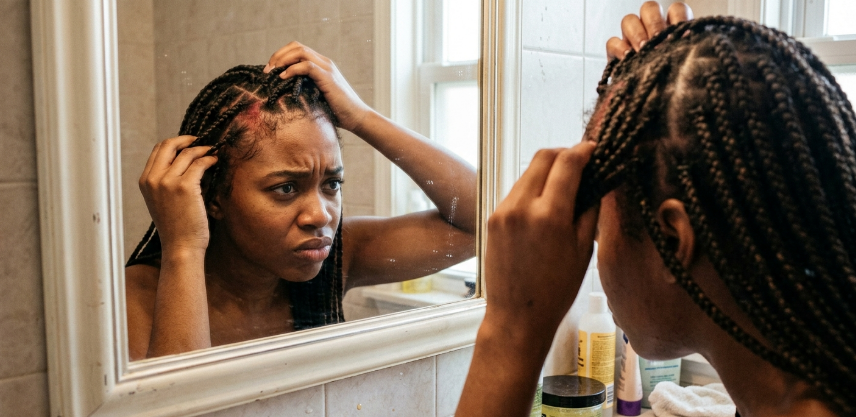
Tension is the enemy of a healthy scalp. When braids, twists, or weaves are installed with excessive force, it puts immense stress on the hair follicles. This can lead to a condition called traction alopecia, which is essentially hair loss caused by pulling. Those beautifully neat edges you worked so hard to preserve? Yeah, they’ll be the first to go.
Pro-Tip: If your stylist’s standard response to “that’s a bit tight” is “it’ll loosen up in a few days,” it might be time to find a new stylist. Your scalp should never feel painful. A little snugness is expected, but pain is a red flag.
The “I Haven’t Seen My Hair in Six Months” Situation
The whole point of a protective style is to protect your hair, not imprison it. We all love the longevity, but leaving a style in for too long is a recipe for disaster.
Think about it: your hair is still growing, still shedding, and still producing natural oils. When it’s locked away for months on end, all that shedding hair has nowhere to go. It gets trapped within the braids or twists, leading to massive tangling and matting. And don’t even get us started on the buildup. Oils, products, sweat, and environmental dust all accumulate, creating a wonderful breeding ground for scalp issues.
Pro-Tip: Listen to your hair. Generally, six to eight weeks is the sweet spot for most protective styles. Any longer, and you’re entering the danger zone. Your hair needs to breathe, be washed, and properly moisturized.
The “Set It and Forget It” Fallacy
This is perhaps the biggest myth surrounding protective styles. Just because your hair is “put away” doesn’t mean you can completely neglect it. A protective style is not a magic shield that exempts you from haircare duty.
Your scalp still needs attention. It needs to be cleansed of buildup and moisturized to prevent dryness and itchiness. Your natural hair, tucked away inside, still needs hydration. And the style itself needs a little TLC to keep it looking fresh.
Pro-Tip: Don’t skip scalp care! Use a gentle cleanser or dry shampoo to remove buildup, and apply a lightweight oil or scalp treatment to keep it nourished. Spritz your natural hair with a leave-in conditioner or hydrating mist to keep it moisturized. A little maintenance goes a long way in ensuring your hair stays healthy.
The “Cheap Stylist, Expensive Regrets” Scenario
We all love a good bargain. But when it comes to your hair, and especially a style that requires manipulation and potential tension, cutting corners can have serious consequences.
An inexperienced or improper installation can lead to a host of problems. They might use techniques that are too aggressive, products that are too harsh, or extensions that are too heavy for your hair type. The result? Breakage, thinning, and a look that’s less “flawless” and more “flawed.”
Pro-Tip: Invest in a skilled, professional stylist who understands the health of your hair. Read reviews, ask for recommendations, and don’t be afraid to have a thorough consultation before they start working their magic. A few extra dollars spent on quality installation is far cheaper than the cost of restoring damaged hair.
The Final Verdict
Let’s be clear: protective styles can be incredibly beneficial for retaining length and allowing your hair a rest from daily manipulation. But they are only truly “protective” when they are installed correctly, maintained properly, and worn for an appropriate amount of time.
If you find yourself experiencing pain, excessive shedding, scalp irritation, or hair loss after a protective style, it’s time to re-evaluate. Your hair is your crown, and it deserves to be treated with respect, even when it’s “under construction.”
So, tell us, queen… Have you ever had a protective style that protected everything but your hair? Share your experiences (the good, the bad, and the slightly traumatizing) in the comments below and/or in the forum! We’ve all got a story, and sometimes, a little shared laughter is the best medicine for a hair mishap.